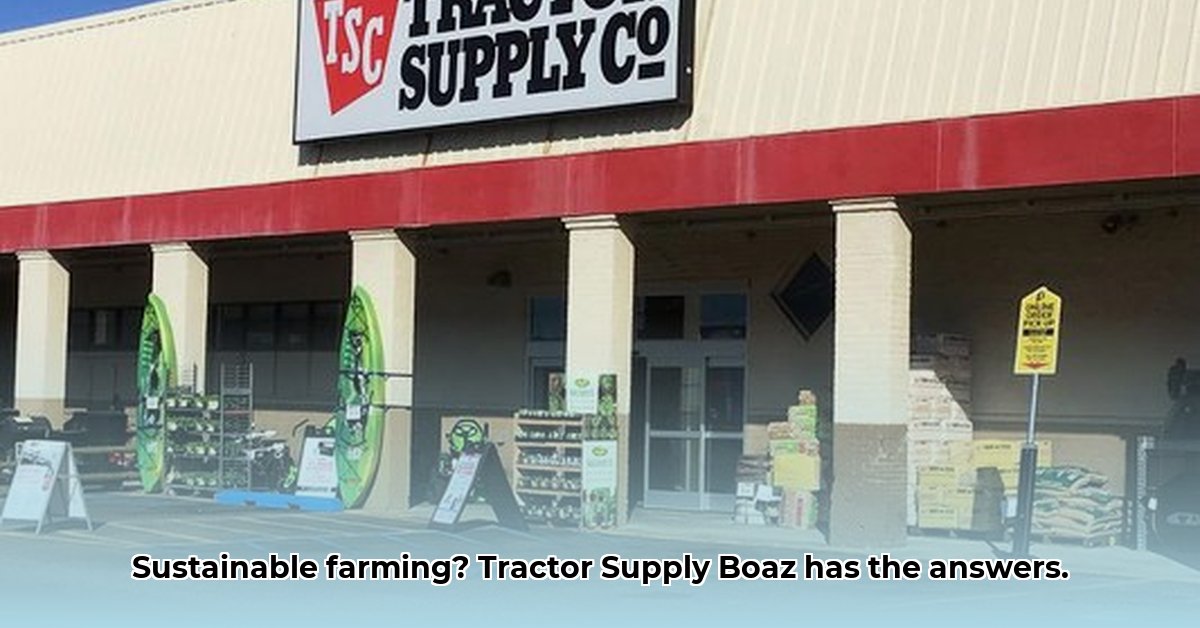
Assessing Tractor Supply Boaz's Contribution to Sustainable Agriculture
Tractor Supply Company (TSC) in Boaz, Alabama, plays a significant role in supplying local farmers. This article investigates the extent to which TSC Boaz actively supports sustainable agricultural practices, examining its product offerings, highlighting areas needing improvement, and proposing actionable steps towards a greener future. While TSC offers a range of products capable of promoting sustainability, a critical gap exists in publicly available data regarding the company's overall environmental commitment and specific initiatives within the Boaz location. For more information on sustainable farming practices, see this helpful guide: Small Tractor Guide.
What Products Support Sustainable Farming?
TSC Boaz stocks various products relevant to sustainable farming. These include organic seeds, crucial for biodiversity and soil health; efficient irrigation systems, vital for water conservation in Alabama’s climate; and livestock supplies, potentially improving animal welfare. However, the mere availability of these products doesn't automatically equate to TSC's active promotion of sustainable agriculture. The ultimate impact hinges on farmer choices and the sustainability of the products' production and supply chain.
The Critical Need for Transparency: A Data Gap Analysis
A significant limitation in assessing TSC Boaz's contribution to sustainable agriculture is the lack of readily available data on the company's environmental impact. Information regarding the environmental footprint of its operations, supply chain practices, and specific sustainability initiatives in Boaz remains scarce. The absence of publicly available sustainability reports or certifications hinders a comprehensive evaluation of their commitment to environmentally responsible practices. This lack of transparency is a major concern and undermines efforts to gauge the true extent of their positive environmental impact. How can consumers or farmers make informed choices about environmentally responsible products without clear information on the environmental impact of TSC's products and their supply chain?
Actionable Steps for Improvement: Short-Term and Long-Term Strategies
TSC Boaz can significantly enhance its contribution to sustainable farming through a multi-pronged approach. Short-term actions include conducting a thorough community assessment to identify the most pressing needs of local farmers and adjusting inventory accordingly. This focuses on understanding exactly what products are in demand and ensuring that what is stocked directly supports local sustainable agricultural goals. Long-term strategies include developing a comprehensive sustainability plan, potentially including responsible sourcing of materials, eco-friendly packaging, and regular educational workshops for local farmers on sustainable farming techniques. This type of proactive approach would not only enhance their positive environmental impact but also significantly increase their brand credibility and trust within the local community.
Collaborative Partnerships: A Path Forward
A collaborative strategy involving partnerships with local farmers, community organizations, and government agencies would be highly beneficial. Joint workshops could share best practices in sustainable farming, making TSC Boaz a hub for agricultural knowledge and sustainability within the community. This type of community engagement would significantly increase the practical impact of the store's efforts. Funding or providing resources for these types of initiatives would further strengthen TSC Boaz's contribution to environmentally responsible agricultural practices in the region. Such collaboration creates a mutually reinforcing ecosystem that benefits both TSC and the local agricultural community.
Conclusion: Unlocking Potential Through Transparency and Collaboration
TSC Boaz possesses significant potential to play a leading role in promoting sustainable agriculture in the Boaz area. However, realizing this potential requires immediate and substantial improvements in transparency and proactive engagement. Publicly disseminating data on their sustainability initiatives is crucial to building trust with customers and demonstrating their commitment to environmentally responsible practices. By embracing collaboration and prioritizing transparency, TSC Boaz can transform itself into a genuine leader in supporting a sustainable agricultural future. The missing ingredient is not the potential, rather it's the company's public commitment and clear action to foster a more sustainable local agricultural ecosystem.